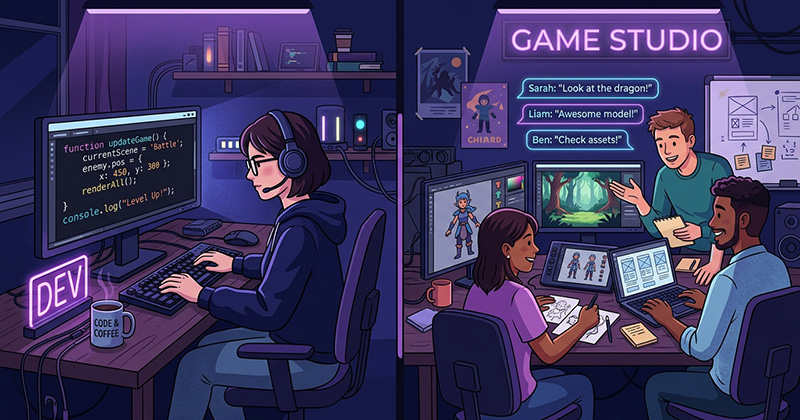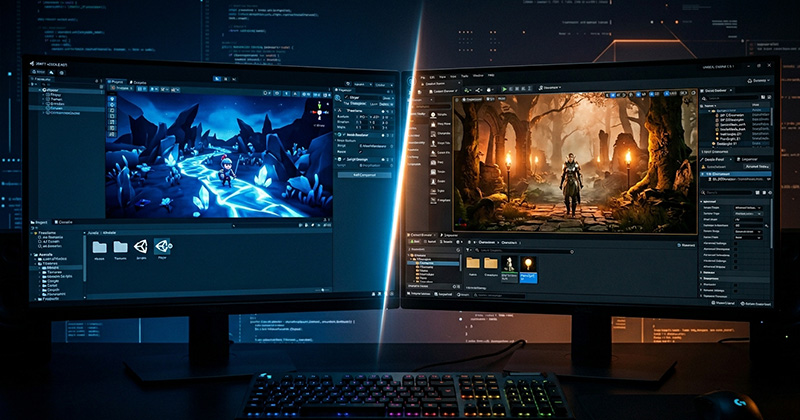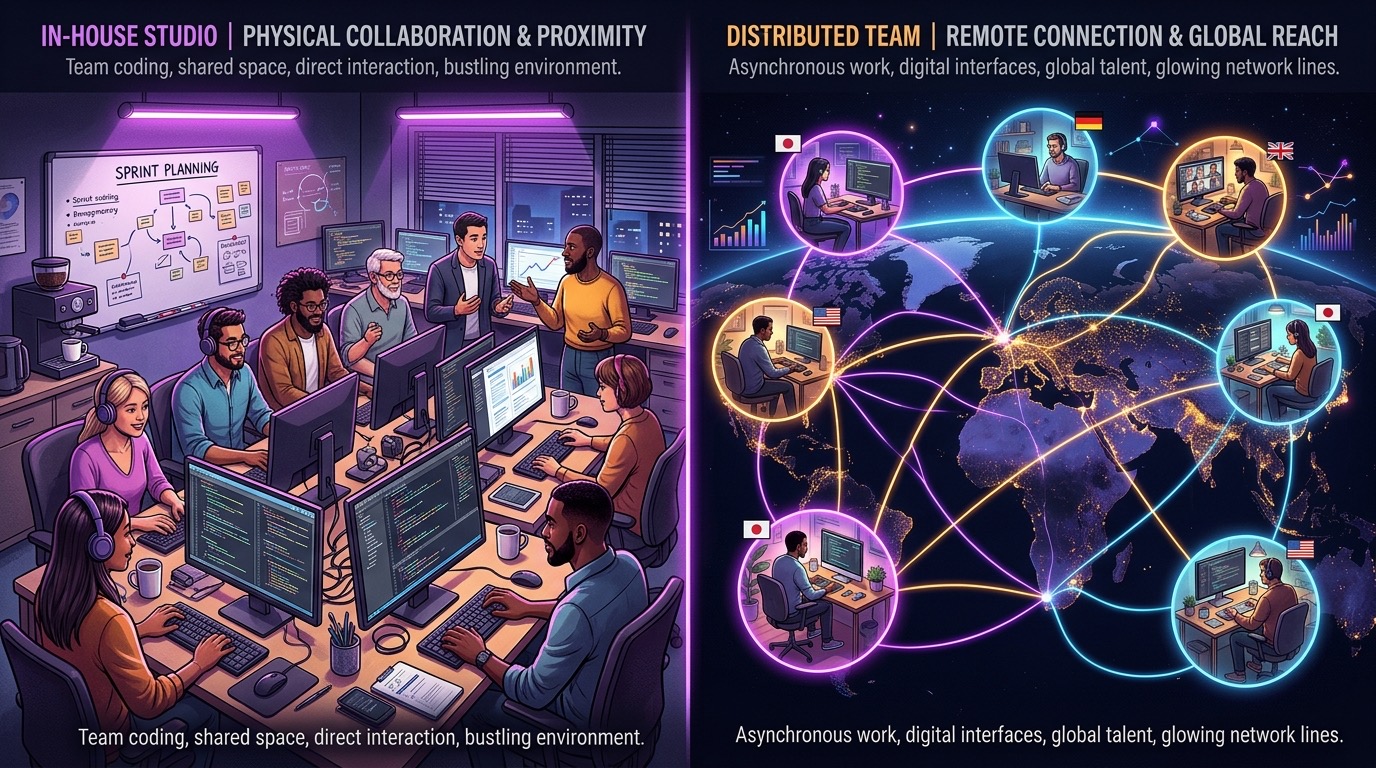
This is a question we hear from studios at every stage, from indie founders building their first game to publishers managing multiple titles simultaneously. The honest answer is that there is no universal right choice. There is only the right choice for your situation.
The Case for Building In-House
Control. When your team is internal, you have direct visibility over everything. You can redirect priorities on a Tuesday afternoon without a change request or a contract conversation. For studios that iterate fast and change direction often, this matters.
Culture and knowledge retention. An in-house team builds institutional knowledge over time. They understand your games, your players, and your way of working in a way that is hard to replicate with an external team.
Long-term cost efficiency. If you have a consistent pipeline of work and can keep a full team busy, in-house becomes more cost-effective over a long enough time horizon. The problem is that most studios do not have consistent pipeline, especially early on.
The Real Cost of In-House in the UK
A mid-level Unity developer in the UK costs between £55,000 and £80,000 per year in salary. Add employer National Insurance, pension contributions, equipment, software licences, and recruitment fees and you are looking at a real cost of £75,000 to £110,000 per person per year. For a small team of five developers, that is half a million pounds per year before you have hired a single artist, designer, or QA engineer.
The Case for Outsourcing
- Speed. You can have a team working on your project within days rather than the months a hiring process takes. For studios with funding rounds tied to milestones, this is not a nice-to-have.
- Flexibility. Scale the team up during production, scale back during pre-production or between projects. You pay for what you need when you need it.
- Access to specialists. You might need a multiplayer specialist for three months or a VFX artist for six weeks. Hiring those skills full-time rarely makes sense.
- Reduced management overhead. A good outsourced studio comes with project management built in.
Where Outsourcing Goes Wrong
Lack of alignment. The studio does not understand the vision and builds the wrong thing confidently. This usually happens when the brief is weak or when there is not enough communication early on.
Hidden costs. Scope changes, communication delays, rework cycles. These are the things that make outsourcing feel expensive even when the day rate looked cheap.
Quality inconsistency. Not every outsourced studio has consistent quality control. A strong portfolio does not guarantee the developers on your project will match it. The solution to most of these is choosing the right partner and investing in a proper discovery phase before production begins.
The Model That Works for Most Studios
The studios we see succeed most consistently are the ones that keep a small, senior in-house team focused on vision, direction, and product decisions, and outsource execution to a trusted development partner. This gives you control where it matters most and flexibility where you need it.
What to Ask Before You Decide
If you are talking to us: we will tell you honestly if what you need is better served by an in-house hire. We are interested in long-term client relationships, not in selling engagements that are the wrong fit. Talk to us and we will give you a straight answer.