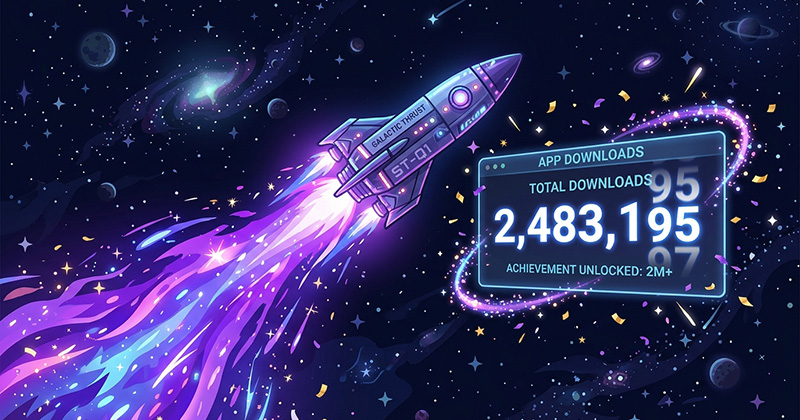
In Q4 2024 we launched a casual puzzle title for a mid-size studio client. They came to us with a polished prototype, a small UA budget, and one question: how do we actually make this work at scale? Ninety days later it had crossed two million downloads. Here is exactly what we did.
This is not a case study dressed up as general advice. It is the specific sequence we followed, what worked, and, crucially, what nearly killed the campaign before it started.
Phase 1: Soft Launch (Weeks 1–3)
We launched first in Canada and Australia. Not because those are glamorous markets, because they are demographically similar to the US and UK but with lower CPI, making your UA budget go 2–3x further. The goal at this stage is signal, not scale. You are trying to answer three questions: Does the core loop retain? Does the monetisation convert? What does a good LTV segment look like?
During the first three weeks we ran 12 creative variants across two ad networks. The winning creative (a 15-second video of the frustration-then-solve loop on a hard level) had a CTR 3.1x the average. We paused everything else and doubled down on that format within 48 hours of seeing the data.
Phase 2: Creative Iteration (Weeks 3–6)
Once the retention signal looked strong (Day 7 at 34%, Day 30 at 18%), we moved into aggressive creative testing. The rule we follow: always have at least 6 active creatives running. Kill the bottom 2 every 10 days and replace with new variants that test one variable at a time. Hook timing, character vs. no character, gameplay reveal vs. challenge reveal.
The most counterintuitive finding: creatives that showed failure (the player losing) outperformed gameplay-only creatives by 40% on IPM (Impressions Per Mille). People want to see the problem before the solution. If your creative only shows winning, you are missing the emotional hook that makes puzzle games compelling.
“The best creative we ever ran was 12 seconds of someone failing to solve a puzzle, followed by three seconds of the solution. CTR was double our average. We ran it for eight weeks.” Aisha Khan, Product Lead, Nine Pixels
Phase 3: Scale (Weeks 6–10)
This is where most studios get it wrong. They get a positive signal and immediately 10x their daily spend. What happens next: the algorithm freaks out, CPI spikes, and the cohort quality tanks because you are suddenly buying audiences the algorithm doesn’t understand. The rule we use is a maximum 30% daily budget increase until you are at your target spend. It takes longer but the cohort quality stays consistent.
We expanded to the US and UK in week 7, with Germany added in week 9. Each new market got its own creative subset: localised thumbnails, not translated scripts. Visuals carry tone across languages. Copy just needs to clear the sense-check bar.
The Thing That Almost Derailed It
In week 5 we had a Day 1 retention drop from 44% to 31% overnight. No content change, no server issues. The culprit: an A/B test on the onboarding flow that went live to 100% of new users instead of the intended 50%. The variant was worse. We caught it in 72 hours, reverted, and retained recovered, but we lost three days of meaningful data and almost made a permanent change based on a broken test.
What We Would Do Differently
- Start creative testing in week 1, not week 3. We wasted two weeks running creatives we should have been iterating faster on
- Set up SafetyNet/Play Integrity checks earlier: we had an inflated install issue in week 8 that cost us a week of bad data
- Build the LiveOps calendar before launch, not during. We launched a limited event in week 4 that was designed during week 3, and the content felt rushed
- Have a contingency budget for creative production. The best-performing creative format we found needed 6 variants per week, which was 3x our initial production estimate
The One-Sentence Version
Get the retention right before you spend on UA, find one winning creative format and systematise it, and scale the budget slowly enough that the algorithm can keep up with you.
Everything else (the market selection, the network mix, the bid strategy) is secondary to those three things. Get them right and two million downloads in 90 days is repeatable. Get them wrong and no amount of budget fixes it.