If you have searched this question, you have probably already seen answers like “anywhere from $5,000 to $500,000.” Which is technically true and completely useless.
So let us give you something more practical. The cost of building a mobile game in 2026 depends on four things: the type of game, the team you use, where that team is based, and how polished you want the final product to be. Once you understand those four variables, the numbers start to make a lot more sense.
The Honest Answer by Game Type
Hyper-Casual Games
These are your endless runners, one-tap puzzles, and reflex games. Simple mechanics, minimal story, fast to build. A well-executed hyper-casual game typically costs between £15,000 and £40,000. The bulk of that goes into game feel and iteration, not complexity. The trap most studios fall into is underestimating how many playtesting rounds it takes to get the core loop right.
Casual and Mid-Core Games
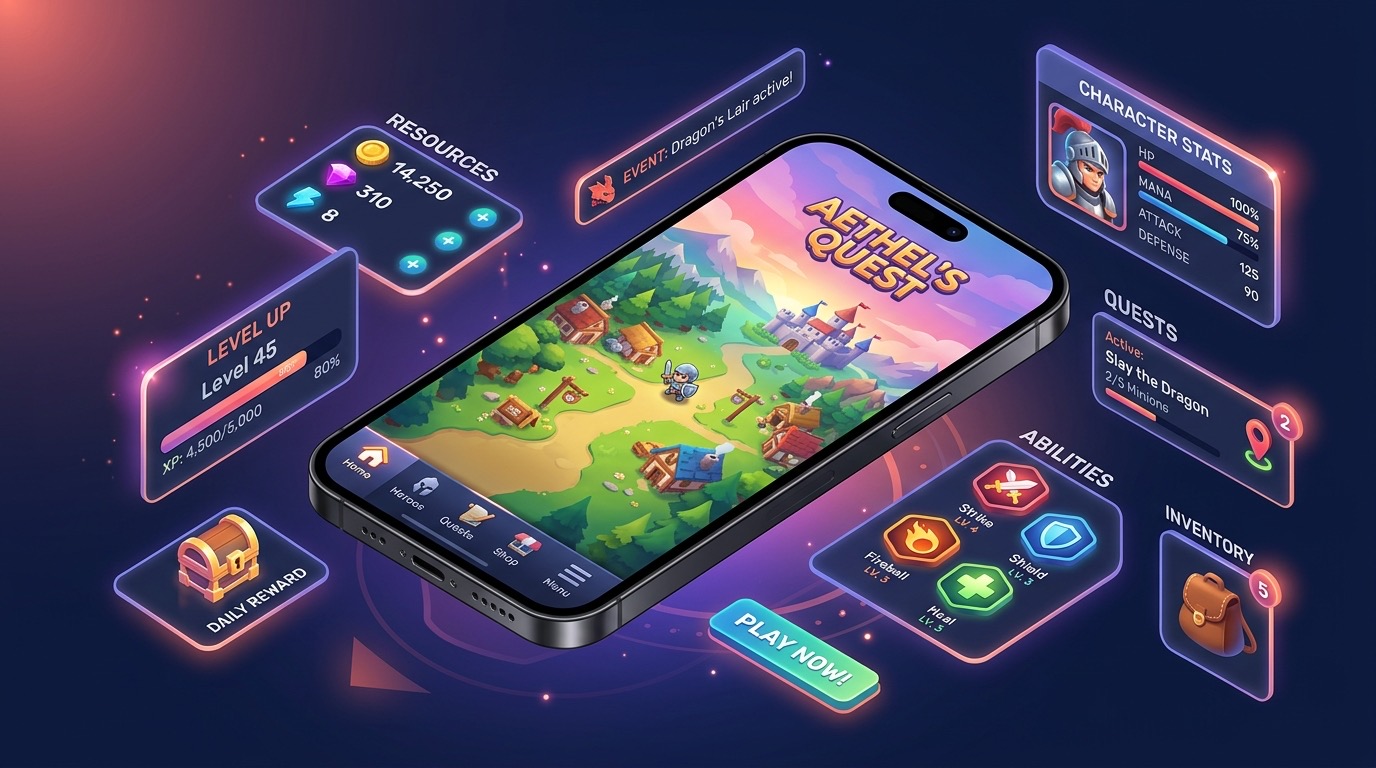
Think match-3, idle games, tower defence, or casual RPGs. More content, more systems, more time. Budget range: £40,000 to £150,000. If you are adding multiplayer, social features, or a live ops layer, you are looking at the higher end of that range or beyond it.
Story-Driven and FPS Games
Narrative games, shooters, and anything with a campaign require significantly more art, voice work, level design, and QA time. Budget range: £100,000 to £400,000 and upwards depending on scope. This is the category where scope creep does the most damage.
Web3 and Blockchain Games
These carry all the complexity of a mid-core game plus smart contract development, wallet integration, and token economy design. Budget range: £80,000 to £300,000 depending on how deep the blockchain integration goes.
What Actually Drives the Cost Up
A game that looks great costs more to build than one that does not. 2D art is cheaper than 3D. Custom character rigs cost more than off-the-shelf assets. This is where most first-time clients are surprised.
Multiplayer adds roughly 40 to 60 percent to your backend costs. Real-time multiplayer requires server infrastructure, matchmaking systems, anti-cheat logic, and a lot of testing at scale. It is not something you can bolt on cheaply.
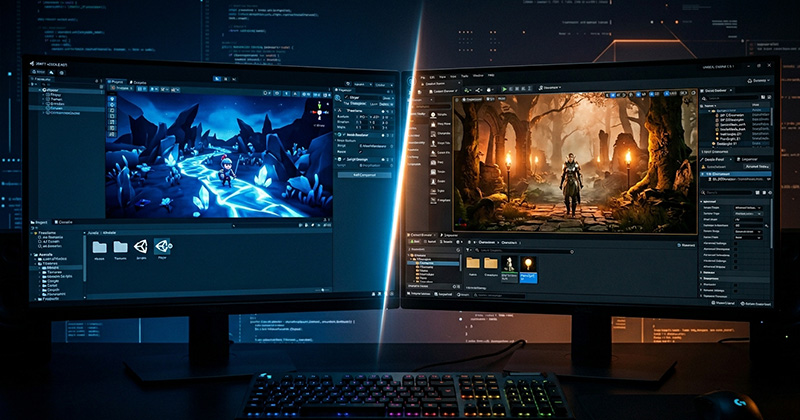
Platform adds time. Building for iOS and Android simultaneously in Unity is relatively efficient. Adding Steam or console ports introduces platform-specific certification requirements, control remapping, and QA cycles that push timelines out.
Post-launch is a real cost too. A game that ships is not a game that is finished. Live ops, balance updates, new content drops, crash fixes, and App Store maintenance all require ongoing resource. If you are planning a live service game, build that into your budget from day one.
In-House vs Outsourcing vs Dedicated Team
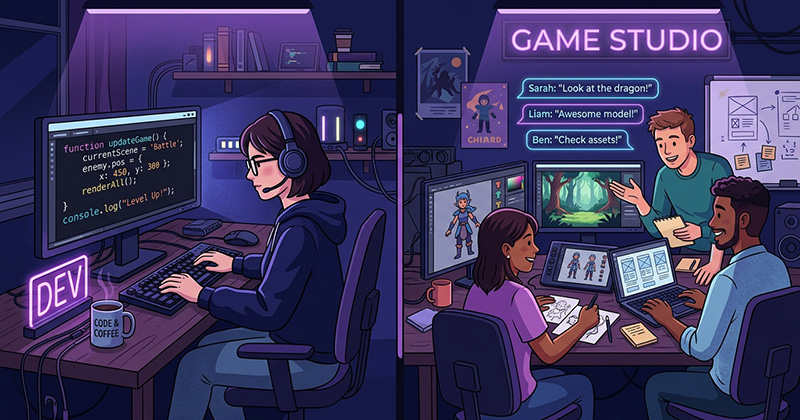
Building in-house in the UK is the most expensive route. A mid-level Unity developer in London costs £60,000 to £85,000 per year in salary alone, before you factor in recruitment, benefits, and management overhead.
Outsourcing to a studio like ours gives you a full team, UK project management, and a fixed or flexible cost structure depending on your engagement model. For most startups and publishers, this is the faster and more cost-effective path, especially when you do not have a pipeline of games to justify a permanent team.
A dedicated team model sits in the middle. You get developers assigned exclusively to your project, managed by us, at a predictable monthly cost. Most of our dedicated teams range from £12,000 to £35,000 per month depending on team size and seniority.
What We Would Tell You in a Discovery Call
If you have £50,000, we can build you a polished hyper-casual or casual game with a solid retention loop and a clean launch-ready build. If you have £150,000, we can build something significantly more ambitious with live ops built in from the start.
The budget shapes the game. The game should not dictate a budget you have not got. We do free 30-minute discovery calls. No pitch, no obligation. If you want an honest estimate for your specific project, that is the best place to start.